

At CES 2026, Rokid’s Vision Gains Industry Recognition
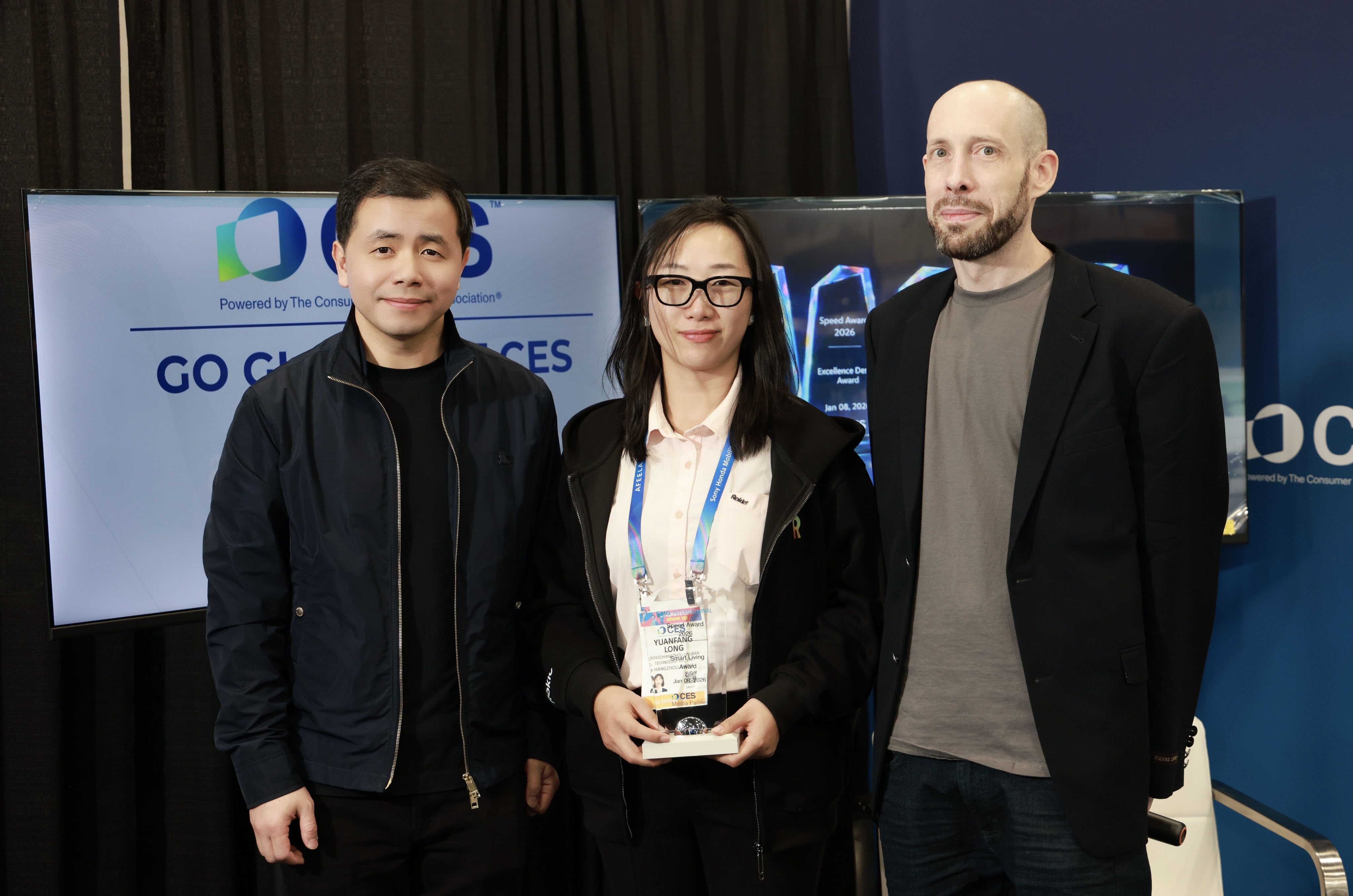
For Rokid, CES 2026 represented both a product launch milestone and a moment of broader industry validation. The company showcased its open AI smart glasses platform at the exhibition while receiving the Smart Living Award at the CES 2026 SPEED AWARD, an honor recognizing companies that demonstrate tangible progress in applying technology to everyday life.
Held on January 8 at the Las Vegas Convention Center, the CES 2026 SPEED AWARD brought together global technology companies, industry executives, and international media to examine how innovation is translating into real-world impact. Speakers from the Consumer Technology Association (CTA), along with leaders from across the technology ecosystem, emphasized that the defining characteristic of CES 2026 was the acceleration of AI productization.
Several speakers drew parallels between the current AI moment and earlier technology inflection points. As former Qualcomm Vice President Larry Paulson noted during the event, innovation cycles that once took a decade to reach mass adoption are now being compressed dramatically. AI, he argued, is no longer confined to software demos or experimental labs.
That perspective was echoed throughout the event, particularly in discussions around smart devices and wearables. As AI moves closer to human perception—through voice, vision, and spatial interaction—the definition of “smart living” is evolving beyond connected devices toward more ambient, assistive systems.
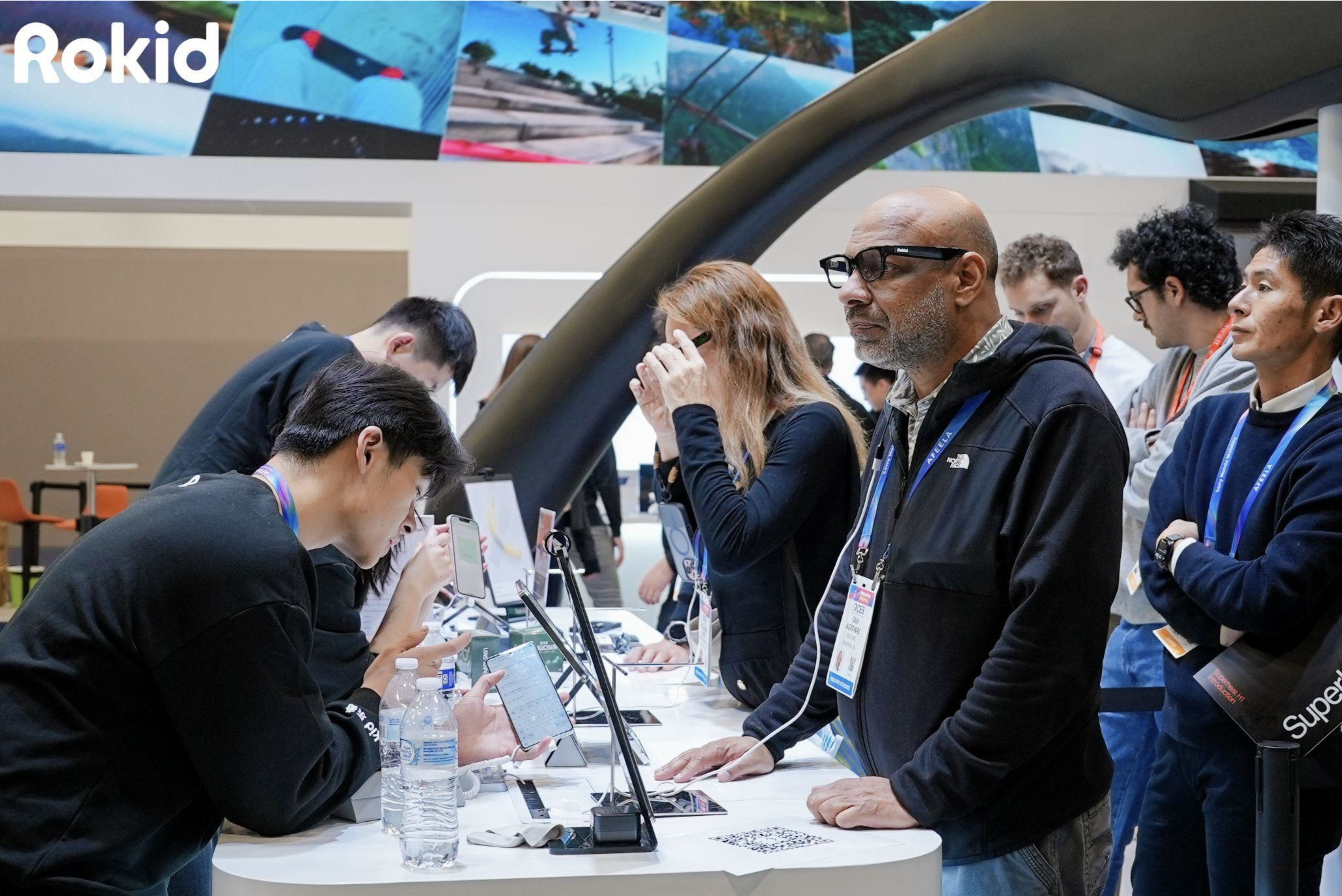
Against that backdrop, Rokid’s presence at CES 2026 stood out for its focus on wearable AI as a daily interface. At its booth, Rokid demonstrated its smart glasses platform (Rokid Glasses and the newest Rokid Ai Glasses Style) designed to bring AI assistants, real-time translation, and contextual computing directly into everyday environments.
Unlike many smart glasses ecosystems that remain closed or regionally limited, Rokid presented an open AI ecosystem that supports multiple large language models and global services. This approach allows AI and real-time translation features to function across different countries and languages, an important distinction as wearable AI begins to scale beyond early adopters.
Rokid’s demonstrations emphasized practical scenarios: multilingual communication, navigation, productivity assistance, and hands-free interaction. Rather than positioning smart glasses as a replacement for smartphones, Rokid framed them as a complementary layer.
Rokid’s approach to wearable AI and spatial computing was formally recognized at the CES 2026 SPEED AWARD, where the company received the Smart Living Award alongside other organizations advancing intelligent lifestyle solutions.
The Smart Living category highlighted technologies that move beyond isolated innovation and demonstrate clear pathways to improving everyday life. Rokid was honored for its progress in AI-powered smart glasses and its contribution to spatial computing as a practical consumer technology, reflecting the broader industry trend toward human-centered AI systems.
Jiaqi Fang
Rokid
email us here
Legal Disclaimer:
EIN Presswire provides this news content "as is" without warranty of any kind. We do not accept any responsibility or liability for the accuracy, content, images, videos, licenses, completeness, legality, or reliability of the information contained in this article. If you have any complaints or copyright issues related to this article, kindly contact the author above.
