

Top Thermal Paint Manufacturer Guangdong Tubainian Expands Architectural Coating Solutions
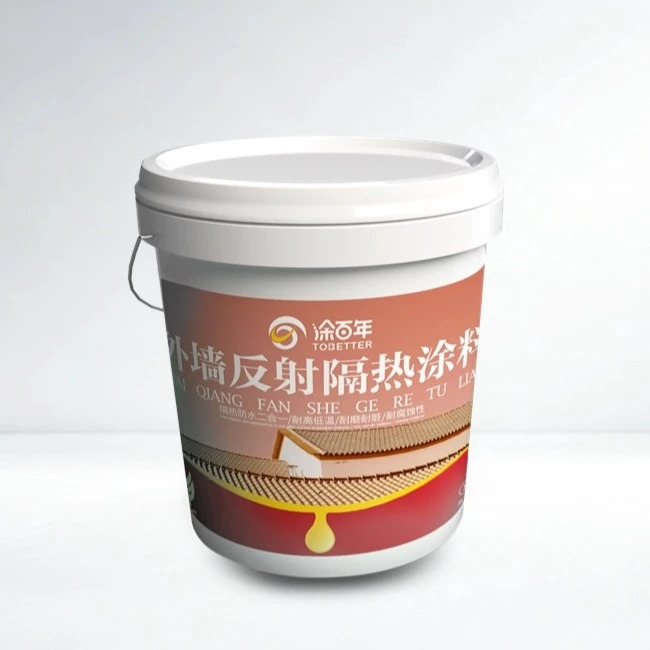
Exterior Reflective Thermal Insulation Coating
HUIZHOU, GUANGDONG, CHINA, October 28, 2026 /EINPresswire.com/ --
Guangdong Tubainian New Materials Co., Ltd. is developing its presence in the architectural coatings market through a product portfolio that includes thermal insulation coatings, floor coatings, and decorative wall finishes. As construction companies, property developers, contractors, and building materials distributors seek coating solutions for different building environments, manufacturers are placing greater emphasis on product performance, surface protection, appearance, and customization. Operating under the TOBETTER brand, Guangdong Tubainian New Materials Co., Ltd. presents a range of coatings designed for residential, commercial, and industrial applications, serving buyers looking for products that combine functional requirements with architectural design considerations.
Thermal paint has become an important category within the broader building coatings sector because exterior surfaces are exposed to sunlight, changing temperatures, moisture, and other environmental conditions. Depending on their formulation, reflective and insulating coatings can help reduce heat transfer or solar heat absorption at treated surfaces. These properties may be relevant to buildings in warm climates, industrial facilities, warehouses, and other structures where surface temperature management is part of a wider energy-efficiency strategy.
For professional buyers, selecting a thermal coating requires more than comparing product names or advertised benefits. Substrate compatibility, surface preparation, application thickness, curing conditions, local climate, and the building's existing insulation system can all influence the result. Manufacturers therefore need to provide clear technical information so that customers can assess whether a particular coating is appropriate for the intended project.
Guangdong Tubainian New Materials Co., Ltd. lists thermal paint among its main product categories on its official website. Its published portfolio includes Exterior Reflective Thermal Insulation Coating, Aerogel Thermal Insulation Coating, and reflective heat-insulating waterproof coating for metal surfaces. These product categories illustrate different approaches to thermal management and protective coating applications, although the precise performance characteristics and suitable substrates should be confirmed through the technical documentation for each product.
The company also offers Floor Paint and Decorative Wall Paint, extending its portfolio beyond thermal insulation to include surface finishing and floor protection. This combination allows buyers to explore multiple coating categories through one supplier, particularly when sourcing materials for projects that involve exterior surfaces, interior walls, and floors.
Thermal Paint and Building Temperature Management
Building surfaces absorb and release heat in response to sunlight, ambient temperature, and material characteristics. On roofs and exterior walls, solar radiation can contribute to surface heating, which may affect indoor thermal conditions depending on the building's design, insulation, ventilation, and other factors. Reflective coatings are designed to reflect a portion of incoming solar radiation, while certain insulating coating systems are formulated to reduce heat transfer through the treated surface.
Guangdong Tubainian New Materials Co., Ltd. presents Exterior Reflective Thermal Insulation Coating, model W9901, as part of its thermal paint range. The company's published product information lists a temperature-drop figure of 10°C–15°C, a solid content of 50%, and a matte finish. It also references JG/T235-2014, REACH, and RoHS in the product information. Buyers should consult the manufacturer's current technical data and supporting documentation to understand the conditions under which the stated temperature reduction is measured and the scope of any applicable compliance claims.
The company also lists an Aerogel Thermal Insulation Coating. According to the published category information, the product has a stated thermal conductivity of 0.044 W/(m·K), a wet density of 0.52 g/mL, and a listed Class A non-combustible fire rating. These figures are product-specific and should be evaluated against the relevant test methods, application thickness, substrate, and intended use before the coating is specified for a project.
Reflective and insulating coatings are not interchangeable in every application. Their performance depends on formulation and the physical conditions of the building. Buyers should distinguish between solar reflectance, thermal conductivity, surface temperature reduction, and the overall thermal performance of a building assembly. A coating may form part of a broader energy-efficiency approach, but it should not automatically be treated as a replacement for conventional insulation or other building-envelope measures.
For contractors and project planners, practical considerations include the condition of the existing surface, compatibility with previous coatings, the required primer, application method, drying time, and expected exposure conditions. Obtaining the technical data sheet and application instructions before procurement can help reduce uncertainty during installation and improve the likelihood that the selected coating meets the project's requirements.
Floor Paint for Commercial and Industrial Environments
Floor coatings serve a different set of purposes from thermal insulation products. Depending on the formulation, they may be used to improve surface appearance, provide a cleanable finish, support resistance to routine wear, or meet particular requirements for commercial and industrial flooring. The appropriate product depends on the substrate, expected traffic, exposure to chemicals or moisture, surface preparation, and the intended service environment.
Guangdong Tubainian New Materials Co., Ltd. includes Floor Paint in its product portfolio, with published categories covering epoxy flooring systems and self-leveling coatings. One listed product is the Epoxy Color Sand Self Leveling Coating, model TBN-300. The company's product page states a solid content of at least 50% and bonding strength of at least 0.6 MPa, and describes the product as solvent-free, non-toxic, and odorless. The manufacturer also identifies OEM and ODM customization as available for this product category.
The company lists a Showroom Epoxy Flooring System for seamless commercial epoxy flooring applications. Its published specifications include a bonding strength of at least 1.5 MPa and surface hardness of at least 2H, with high-gloss and matte finishes identified as customizable options. These details give potential buyers a starting point for comparing products, but the suitability of any coating should be established by reviewing the complete technical specifications and confirming the testing conditions behind the stated values.
Floor coating projects often require careful preparation before application. Concrete substrates may need to be cleaned, repaired, and assessed for moisture and surface strength. Depending on the selected system, primer, intermediate layers, decorative materials, and a topcoat may form part of the installation process. Poor preparation or incorrect application can affect adhesion and the finished appearance, making adherence to the manufacturer's instructions important.
Different facilities also have different flooring requirements. A showroom may prioritize visual consistency and ease of cleaning, while a factory may place greater emphasis on abrasion resistance, mechanical loading, or chemical exposure. Warehouses, workshops, commercial premises, and residential spaces may likewise require different product specifications.
For these reasons, the phrase Floor Paint covers a broad group of solutions rather than one universal product. Buyers should identify the substrate and operating environment before choosing a coating system. They should also confirm coverage rates, curing time, application thickness, and maintenance requirements to estimate material quantities and plan the project schedule.
Decorative Wall Paint and Architectural Design
Decorative wall coatings contribute to the appearance and character of interior and exterior spaces. Color, texture, gloss level, and surface finish can influence how a building is perceived, while weather exposure and substrate conditions may affect the selection of an appropriate coating. For architects, designers, contractors, and building materials distributors, a varied decorative coating portfolio can support different design concepts and project budgets.
Guangdong Tubainian New Materials Co., Ltd. offers Decorative Wall Paint through its official website. The company's published category includes products such as Velvet Texture Coating and Micro Cement Coating. The listed Velvet Texture Coating, model TQY-966, is presented with a silver-white base color, packaging of 5 kilograms per bucket, and 51 available colors with custom color-matching options. The Micro Cement Coating, model TQY-926, is described as a two-part product, with a powder-to-liquid mixing ratio of 3:1 and packaging containing 15 kilograms of powder and 5 kilograms of resin.
These product details illustrate the range of finishes and application systems available within the company's decorative wall category. Textured coatings can create a more dimensional surface than conventional flat paint, while microcement-style finishes are often selected for their relatively continuous, contemporary appearance. Actual visual results depend on the product system, substrate preparation, application technique, and finishing method.
Color selection is another important part of decorative coating procurement. Large projects may require consistent colors across multiple rooms, floors, or buildings. Where customized color matching is offered, buyers should confirm the available color references, sample approval process, minimum order quantities, and the procedures used to maintain consistency between production batches.
Decorative wall products also need to be assessed for the environment in which they will be used. Interior and exterior applications can impose different requirements related to moisture, ultraviolet exposure, temperature variation, and cleaning. Contractors should review the intended application area and consult the manufacturer's guidance before specifying a coating for a particular surface.
For distributors, a combination of decorative and functional coating products can support a wider range of customer needs. A single project may require a textured wall finish in a public-facing area, a different coating for an exterior wall, and a separate system for the floor. The ability to source these categories through one supplier may simplify communication and product coordination, provided each selected product is suitable for its intended use.
Research, Manufacturing, and Customization
Architectural coating production involves formulation, mixing, dispersion, quality checks, filling, packaging, and storage. Depending on the product, manufacturers must balance characteristics such as viscosity, adhesion, coverage, texture, drying behavior, durability, and application convenience. Different coating categories also require different technical approaches, meaning that product development must account for the intended substrate and operating conditions.
Guangdong Tubainian New Materials Co., Ltd. describes TOBETTER as a manufacturer of architectural coatings with research and development, production, and OEM/ODM capabilities. Its company profile states that the business was founded in 2005 and operates a manufacturing facility in Huizhou, Guangdong Province. The same page reports a facility area of more than 30,000 square meters and 15 automated production lines.
The company's published profile also refers to ISO 9001 and ISO 14001 management systems, patents, and an in-house quality-control laboratory. Such information can help business buyers understand the manufacturer's stated production and quality-management framework. For procurement purposes, customers should request current supporting certificates, confirm the legal entity named on the documents, and check whether the certifications apply to the facility and product category relevant to their order.
Customization is particularly relevant to business customers purchasing coatings for specific projects or private-label distribution. OEM and ODM services may involve adjustments to color, packaging, labeling, product specifications, or formulation, depending on the product and the manufacturer's capabilities. These arrangements should be confirmed individually, including minimum order quantities, sample development, approval procedures, lead times, and any limitations on customized specifications.
Batch consistency is another consideration. Contractors and distributors generally need subsequent deliveries to maintain comparable color, texture, application behavior, and other agreed characteristics. A structured process for raw-material inspection, production monitoring, finished-product testing, and batch identification can help manufacturers manage these expectations.
For buyers assessing a coating supplier, a practical evaluation should include more than the range of available products. Technical documentation, product samples, test reports, packaging specifications, storage requirements, shelf life, and after-sales communication may all influence the suitability of the supplier for a particular project.
Serving International B2B Coating Markets
International coating procurement involves coordination among manufacturers, importers, distributors, contractors, and project owners. Product selection must be aligned with the destination market, intended application, local construction practices, and any relevant regulatory requirements. Buyers may also need to consider transportation conditions, storage temperatures, packaging protection, and the timing of deliveries.
Guangdong Tubainian New Materials Co., Ltd. presents its products and business services through the TOBETTER website, where customers can review its thermal paint, Floor Paint, Decorative Wall Paint, emulsion paint, and stone texture paint categories. The company also promotes OEM/ODM solutions and invites buyers to request quotations and customized samples.
A sample-review process can be useful when the final result depends on appearance or application behavior. For decorative coatings, buyers may want to assess color and texture under realistic lighting conditions. For floor systems, they may need to examine the finished surface and verify whether the selected specification suits the expected use. For thermal coatings, technical data and relevant test information are important for understanding the claimed performance.
Before placing a bulk order, purchasers should establish the exact product name and model, required quantity, packaging format, delivery schedule, and documentation to be supplied. They should also confirm the recommended application process and determine whether any project-specific testing or sample approval is required. These steps can help reduce misunderstandings between the supplier and customer.
The architectural coatings market encompasses products with very different functions. Thermal insulation coatings address heat-related surface requirements, floor coatings serve particular flooring needs, and decorative wall coatings contribute to the visual finish of a building. Manufacturers that organize these products within a broad portfolio can give buyers more options when planning different parts of a construction or renovation project.
Guangdong Tubainian New Materials Co., Ltd. brings these categories together through its TOBETTER product range. Its thermal paint listings include reflective and aerogel insulation coatings, its Floor Paint portfolio includes epoxy and self-leveling systems, and its Decorative Wall Paint category includes textured and microcement-style products. For professional buyers, the next step is to match each product's verified technical characteristics to the project's substrate, environmental conditions, design requirements, and performance expectations.
About Guangdong Tubainian New Materials Co., Ltd.
Guangdong Tubainian New Materials Co., Ltd. is a China-based architectural coatings manufacturer operating under the TOBETTER brand. According to its official company profile, the business was founded in 2005 and operates a production base in Huizhou, Guangdong Province. Its product portfolio covers thermal paint, floor coatings, decorative wall coatings, emulsion paint, stone texture paint, and other architectural coating solutions.
The company's published offerings include Exterior Reflective Thermal Insulation Coating, Aerogel Thermal Insulation Coating, epoxy floor coating systems, Velvet Texture Coating, and Micro Cement Coating. It also describes OEM and ODM services for business customers seeking product customization and supply arrangements. Product specifications, customization options, certifications, and application requirements should be confirmed with the company for each individual order.
For more information about its products and services, visit www.tobettercoating.com.
Address: Lanshukeng Industrial Zone, Hongwei Village, Xinxu Town, Huiyang District, Huizhou City, Guangdong Province, China (Factory of Huizhou Huiyang Bohua Packaging Products Co., Ltd.)
Official Website: https://www.tobettercoating.com/
GenSheng Sun
Guangdong Tubainian New Materials Co., Ltd.
sean17898430991@gmail.com
Legal Disclaimer:
EIN Presswire provides this news content "as is" without warranty of any kind. We do not accept any responsibility or liability for the accuracy, content, images, videos, licenses, completeness, legality, or reliability of the information contained in this article. If you have any complaints or copyright issues related to this article, kindly contact the author above.
